
Leather is more than just a fabric; it is a legacy. Whether it is a premium men’s leather jacket, a handcrafted briefcase, or a pair of heirloom boots, leather is an investment that, if cared for correctly, can last for decades. Unlike synthetic materials, leather is a natural, porous organic matter that “breathes.” However, this same organic nature makes it vulnerable to the environment and, more importantly, to improper cleaning techniques.
Many enthusiasts unknowingly damage their high-end leather gear by following “old wives’ tales” or using aggressive cleaning hacks found online. In this definitive guide, we will explore the science of leather care, the most common mistakes people make at home, and the professional-grade steps you should take to preserve the suppleness and longevity of your leather.
Understanding the Anatomy: Why Leather is Different from Fabric
Before diving into the mistakes, we must understand what we are cleaning. Leather is essentially processed animal hide composed of dense collagen fibers. During the tanning process, these fibers are stabilized to prevent decay while maintaining flexibility.
The surface of leather contains microscopic pores. These pores hold natural oils that keep the material soft. When you use the wrong chemicals or techniques, you aren’t just “cleaning” the surface; you are often stripping away the very oils that prevent the leather from cracking and dry-rotting. This is why a semantic approach to leather care, viewing it as “skin” rather than “cloth,” is vital.
Mistake #1: The “Drowning” Effect (Excessive Water Usage)
The most frequent mistake made at home is treating a leather jacket like a cotton t-shirt. Water is the silent enemy of high-quality leather.
Why it’s fatal:
When leather becomes saturated with water, the liquid penetrates the inner fibers. As the water evaporates, it pulls the leather’s internal lubricating oils out with it. This leaves the fibers brittle, causing the leather to stiffen and eventually crack. Furthermore, excessive moisture can lead to the growth of mildew and mold, which can permanently stain and degrade the hide.
The Professional Fix:
Never soak leather. Instead, use a damp (not dripping) microfiber cloth. If a spill occurs, blot it immediately with a dry cloth rather than rubbing it, which pushes the liquid deeper into the pores.

Mistake #2: Using “Kitchen Hacks” (Vinegar, Dish Soap, and Baking Soda)
The internet is full of DIY cleaning advice suggesting that vinegar or dish soap can remove stains. For premium leather, this is dangerous advice.
The Science of pH Balance:
Leather is slightly acidic, typically having a pH level between 4.5 and 5.0. Most dish soaps are alkaline (high pH), designed to strip grease. When applied to leather, they cause a chemical reaction that breaks down the finish. Similarly, vinegar is highly acidic; while it can remove some stains, it can also “burn” the delicate tanning agents in the leather, leading to discoloration.
The Professional Fix:
Always use a dedicated, pH-balanced leather cleaner. These products are specifically formulated to lift dirt without disturbing the chemical equilibrium of the hide.
Mistake #3: Ignoring the Leather Type (Suede vs. Full-Grain)
Not all leather is created equal. A mistake often made is using the same cleaning method for a smooth cowhide jacket and a suede bomber.
- Full-Grain/Top-Grain Leather: These have a protective grain layer and can handle gentle moisture.
- Suede and Nubuck: These have a “napped” surface with open fibers. Applying liquid cleaners to suede usually results in permanent spotting and flattening of the texture.
The Professional Fix:
Identify your leather before touching it. Suede requires a dry-cleaning approach using a suede stone and a brass-bristle brush. Smooth leathers require creams and balms.

Mistake #4: The Quick-Dry Trap (Using Hairdryers or Radiators)
If your leather jacket gets caught in a rainstorm, your first instinct might be to blast it with a hairdryer or hang it over a heater. Do not do this.
The Danger of Desiccation:
Forced heat causes the leather to dry too quickly. This results in “protein shrinkage,” where the collagen fibers tighten and become hard. Once leather has been “cooked” by artificial heat, it is almost impossible to restore its original softness.
The Professional Fix:
Hang your leather on a wide, padded hanger and let it air-dry naturally at room temperature, away from direct sunlight. Direct UV rays can also bleach the dye and dry out the surface.
Mistake #5: Skipping the Patch Test
Even “safe” cleaners can react differently to various dyes and finishes (like aniline or semi-aniline dyes). Many people apply a cleaner directly to the center of their jacket, only to find it leaves a dark ring or lifts the color.
The Professional Fix:
Always perform a “spot test” on an inconspicuous area, such as the inside of the hem or under the armpit. Apply the product, wait 24 hours, and check for any color transfer or texture changes.
Mistake #6: Using Abrasive Tools
Using a stiff-bristled scrub brush or a kitchen sponge (the green side) can be catastrophic. These tools create micro-scratches on the “top grain” of the leather. Once the grain is scratched, the protective finish is compromised, making the leather even more susceptible to dirt and moisture.
The Professional Fix:
Use only soft microfiber cloths or horsehair brushes. Horsehair is the gold standard in leather care because the bristles are soft enough not to scratch but firm enough to lift dust from the pores.

Mistake #7: Forgetting the Conditioner (The “Moisture Gap”)
Cleaning is a subtractive process; it removes dirt, but it also removes a bit of moisture. The biggest mistake people make is cleaning their leather and then stopping there.
The Role of Conditioning:
A leather conditioner acts as a moisturizer. It replenishes the fats and oils that keep the fibers sliding smoothly against each other. Without conditioning, even the cleanest leather will eventually become brittle and fail.
The Professional Fix:
After every cleaning, apply a high-quality leather cream or balsam. Look for ingredients like beeswax or lanolin, and avoid products containing petroleum or silicone, as these can clog pores and prevent the leather from breathing.
Semantic Deep Dive: The Importance of Patina vs. Dirt
In the world of premium leather, there is a difference between “dirty” and “patina.” Patina is the natural aging process where leather develops a soft sheen and darker character through use and exposure to body oils.
Many owners mistakenly try to “scrub away” the patina, thinking it is dirt. In doing so, they strip the character and value from the item. True leather care is about removing harmful contaminants (salt, sweat, mud) while preserving the natural evolution of the hide.
Step-by-Step: The Professional Home Cleaning Routine
To ensure your LVH Leather gear remains in pristine condition, follow this professional sequence twice a year:
- Dry Dusting: Use a soft horsehair brush to remove loose dust and grit.
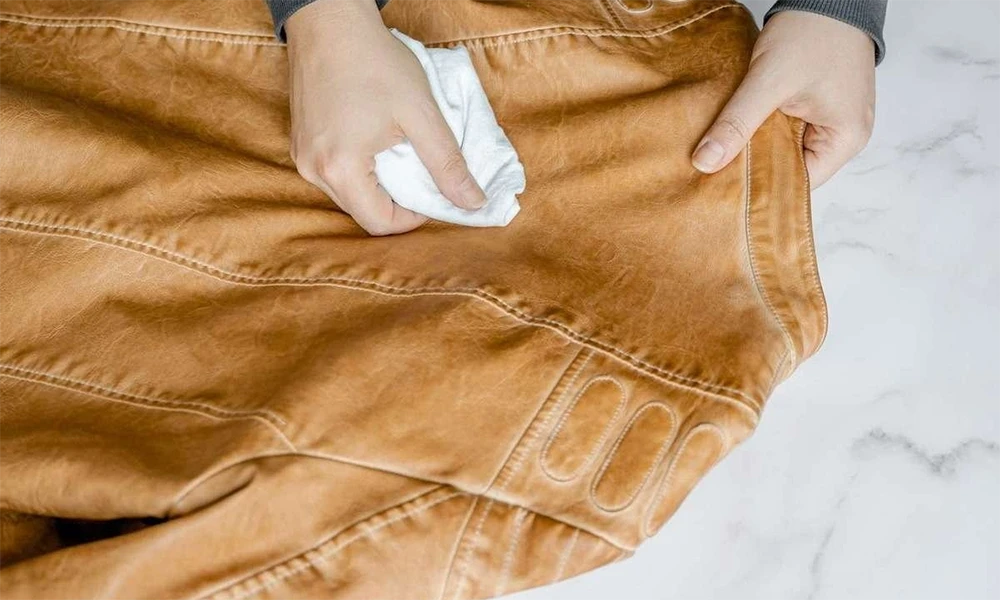
- Gentle Wipe: Use a slightly damp microfiber cloth with a pH-neutral cleaner. Use circular motions.
- Air Dry: Hang the garment in a cool, ventilated room for at least 12 hours.
- Conditioning: Apply a small amount of leather conditioner to a cloth (never directly to the leather) and massage it in.
- Buffing: After the conditioner has been absorbed (about 30 minutes), buff the surface with a clean, dry cloth to bring out the natural shine.
Conclusion: Respect the Craft
Leather is a material that tells a story. Every crease and shade is a reflection of its journey. By avoiding these common cleaning mistakes, you are not just maintaining a piece of clothing; you are preserving a craft.
At LVH Leather, we take pride in selecting the finest hides that are designed to age gracefully. When you treat your leather with the right tools and respect, it doesn’t just last a lifetime; it gets better with time. Stop using the “hacks” and start using the science of leather care. Your gear deserves it.
Frequently Asked Questions (FAQs)
Q: Can I use baby wipes on my leather jacket?
Ans: No. Baby wipes often contain alcohol to help the liquid evaporate and fragrances that can dry out the leather and damage the topcoat finish.
Q: How often should I clean my leather?
Ans: For daily-wear items like jackets, a deep clean and condition should be done every 6 to 12 months. However, dusting should be done monthly.
Q: Can I put my leather jacket in the washing machine?
Ans: Absolutely not. The mechanical agitation, heat, and immersion in water will ruin the structure of the hide and likely cause the lining to shrink at a different rate than the leather, distorting the shape forever.