


Maintaining a colored leather jacket requires more than just hanging it in your closet after a night out. Whether you own a vibrant red biker jacket, a deep forest green blazer, or a classic tan bomber, these pieces represent a significant financial and style investment. Unlike standard black leather, colored pigments are highly susceptible to environmental factors. Over time, sunlight, moisture, and improper cleaning can cause your jacket to lose its brilliance and look aged or patchy.
In this comprehensive guide, you will learn the exact steps to preserve the hue of your leather. You will discover the science behind why fading occurs and how you can use professional techniques to keep your jacket looking as vibrant as the day you bought it.
The Science of Why Colored Leather Fades
To protect your jacket, you must understand what causes it to lose color in the first place. Leather is a porous, organic material that has been treated with dyes. According to the technical standards provided by the Leather Working Group, the sustainability and durability of leather depend heavily on why every man needs a black leather jacket.
The primary enemy of colored leather is ultraviolet (UV) radiation. Sunlight triggers a process called photodegradation. When UV rays hit the leather, they break down the chemical bonds of the dye molecules. This is especially true for red and blue pigments, which have shorter wavelengths and tend to fade faster than earth tones. Data suggests that prolonged exposure to direct sunlight can cause visible fading in certain dyed leathers in as little as 100 hours of cumulative exposure.
Another factor is oxidation. When leather is exposed to air and humidity, the natural oils and the pigments can react with oxygen. If the leather becomes too dry, the fibers shrink and become brittle. This causes the dye to flake away or lose its depth. By understanding these factors, you can take proactive steps to intervene before the damage becomes permanent.
Understanding Your Leather Type
Not all leather jackets react to color maintenance in the same way. You must identify if your jacket is aniline, semi-aniline, or pigmented. LVH leather Jacket is dyed with soluble dyes but lacks a protective topcoat. This makes it feel incredibly soft, but it is the most prone to fading. According to the American Leather Chemists Association, aniline leathers require more frequent conditioning to keep the dyes locked in.
Pigmented or protected leather has a polymer coating containing pigments. While this type is more durable and resistant to fading, it can still crack if the coating becomes dry. If you own a suede or nubuck jacket, the maintenance is even more specialized because the nap of the leather can trap dust that acts as a bleaching agent over time. Knowing your specific leather type allows you to choose the right products and avoid chemical reactions that could ruin the finish.
The Importance of the Spot Test
Before you apply any cleaner or conditioner to your jacket, you must perform a spot test. You should never skip this step because every dyeing process is different. Some manufacturers use water-based dyes, while others use oil-based ones. Find a small, inconspicuous area, such as the inside of the hem or the underside of the collar.
Apply a tiny amount of your chosen product and wait 24 hours. Check for any darkening, color transfer onto your cloth, or changes in texture. If the color remains stable and the leather feels supple, you can proceed to treat the rest of the garment. This simple habit protects you from accidentally ruining a premium piece of clothing.
Step-by-Step Guide to Cleaning Without Stripping Color
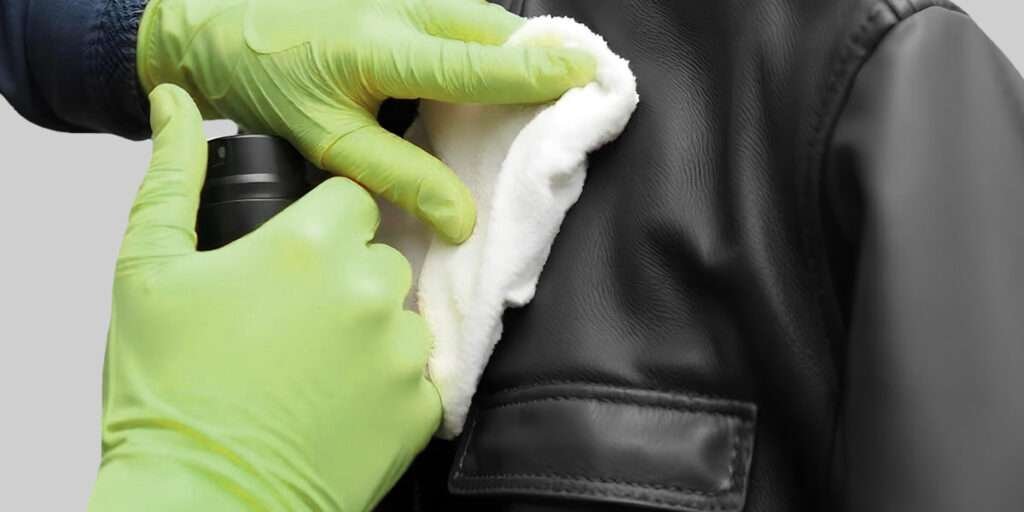
When your jacket gets dirty, your first instinct might be to grab a wet wipe or a generic soap. You must avoid this at all costs. Most household cleaners have a high pH level, making them alkaline. Leather is naturally slightly acidic, with a pH of around 4.5 to 5.0. Using an alkaline cleaner will disrupt the chemical balance. This leads to color bleeding and structural damage.
Step 1: Dry Dusting
Use a soft, dry microfiber cloth to wipe away dust and surface debris. Dust can be abrasive. If you rub it into the leather while cleaning, it can act like sandpaper and dull the finish.
Step 2: Use a pH-Balanced Cleaner
Purchase a dedicated leather cleaner specifically formulated for dyed leathers. Apply the cleaner to a cloth rather than directly onto the jacket. Use circular motions to gently lift dirt. You should avoid soaking the leather. Excess water is a major cause of dye migration, where the color moves from one part of the jacket to another.
Step 3: Gentle Drying
Always let your jacket air dry at room temperature. You should never use a hair dryer or place it near a radiator. High heat causes the leather to contract rapidly, which creates microscopic cracks in the pigment layer.
Conditioning for Color Retention
Conditioning is the most critical part of long-term maintenance. Think of conditioner as a moisturizer for your jacket. When leather is well hydrated, the dye molecules remain trapped within the lubricated fibers. This prevents the “ashy” look that often plagues older leather garments.
You should choose a water-based or wax-based conditioner that does not contain silicones or petroleum. Silicone can create a plastic-like shine that suffocates the leather, while petroleum can eventually dissolve certain dyes. Expert restorationists often point to the guidelines by the Smithsonian Institution Conservation Institute regarding the preservation of organic materials. They emphasize that maintaining a stable moisture content is key to preventing cellular breakdown in hides.
Apply the conditioner every three to six months, depending on how often you wear the jacket. If you live in a very dry climate, you may need to do this more frequently. Rub a small amount into the leather, let it sit for twenty minutes, and then buff away the excess with a clean cloth. This buffing process brings out the natural luster of the color without making it look greasy.
Advanced Protection: UV Shields and Water Repellents
If you want to go the extra mile, you should consider using a UV protectant spray. These products act like sunscreen for your clothes. They contain stabilizers that absorb UV radiation and prevent it from reaching the dye molecules. This is especially important for bright colors like turquoise, yellow, or bright red.
Additionally, applying a water repellent spray can prevent water spots. When rain hits an unprotected colored jacket, it can leave behind minerals that create unsightly rings. A fluoropolymer-based spray creates a microscopic barrier that allows the leather to breathe while causing water to bead off the surface. You can find more information on textile and leather protection through the AATCC (American Association of Textile Chemists and Colorists). Always ensure the jacket is clean and dry before applying any protective spray.
Professional Storage Practices
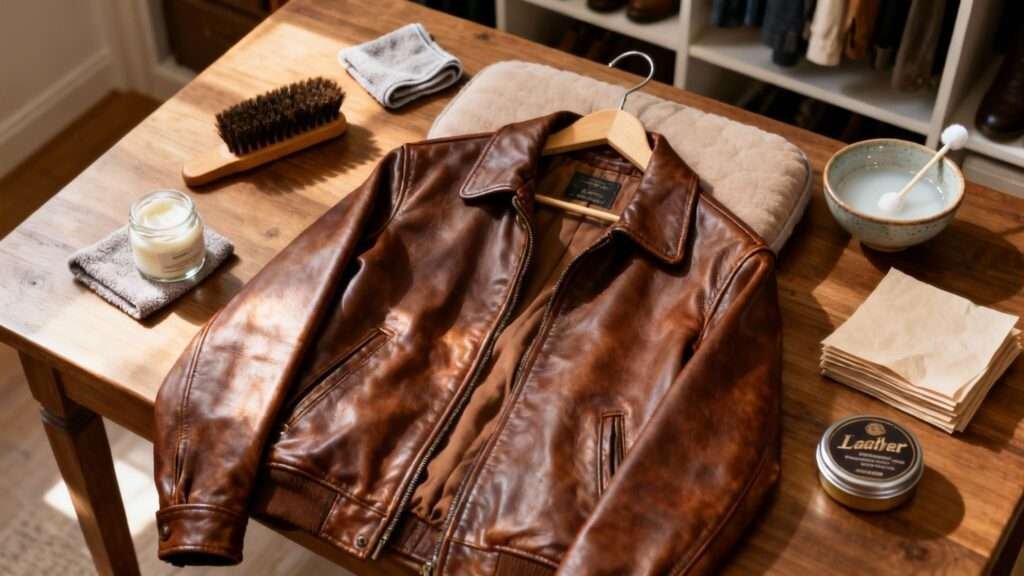
How you store your jacket when you are not wearing it is just as important as how you clean it. You should avoid hanging your jacket on thin wire hangers. The weight of the leather will cause the shoulders to stretch and the color to stress and lighten in those areas. Instead, use wide, padded hangers that support the natural shape of the garment.
The environment matters significantly. You should store your colored leather in a cool, dark, and dry place. A closet with a closed door is ideal because it blocks out ambient light that can cause slow fading over several months. You must avoid using plastic garment bags. Plastic traps moisture, which can lead to mold and mildew growth. Mold is particularly devastating for colored leather because the enzymes produced by the fungi can permanently bleach the pigments. Use a breathable cotton garment bag if you need to protect it from dust.
Common Myths to Avoid
There is a lot of misinformation online regarding leather care. You should be wary of DIY tips that suggest using olive oil, hairspray, or vinegar. Olive oil is a vegetable fat that will eventually go rancid inside the leather. This creates a foul odor and darkens the color unevenly. Hairspray contains alcohol, which dries out the leather and can strip the top coat of dye instantly. Vinegar is highly acidic and can weaken the fibers if not diluted properly. Always stick to products specifically engineered for leather.
Seasonal Care and Maintenance Schedule
To make it easy for you to remember, follow this seasonal schedule:
- Spring: Perform a deep clean and condition after the winter months to remove any salt or moisture residue.
- Summer: Apply a UV protectant if you plan on wearing the jacket outdoors frequently.
- Autumn: Inspect for any dry patches and apply a light layer of conditioner to prepare for colder weather.
- Winter: Ensure the jacket is properly waterproofed against snow and rain.
Frequently Asked Questions
Can I use baby wipes to clean a smudge on my colored leather?
No, you should avoid baby wipes. Most wipes contain alcohol and fragrances that can dissolve the leather finish and cause the color to fade or streak. Use a damp microfiber cloth with distilled water instead.
How do I fix a spot that has already faded?
If a specific area has faded, you may need a color touch-up kit. However, matching the exact shade of a colored jacket is difficult for an amateur. In such cases, it is often better to consult a professional leather tanner or repair specialist who can custom-mix a dye for you.
Will conditioning my jacket make it darker?
Most high-quality conditioners will slightly darken the leather temporarily as it absorbs the moisture. Once it dries and you buff it, the color should return to its original shade. However, always spot test on a hidden area to be sure of the final result.
Conclusion
Your colored leather jacket is a statement piece that reflects your personality. By following these maintenance steps, you can ensure that it remains a vibrant part of your wardrobe for decades. Remember that prevention is always easier and cheaper than repair. Keep it clean, keep it hydrated, and most importantly, keep it out of the harsh sun when possible.
By investing a small amount of time into proper care, you are protecting the integrity of the material and the brilliance of its color. Whether it is a vintage find or a modern luxury item, your jacket deserves the best treatment to stay as bold and beautiful as the day you first put it on. Take action today by checking your jacket for dryness and ensuring it is stored in a light-controlled environment.