


The leather jacket remains one of the few garments in fashion history that has never gone out of style. From its origins in military aviation to its status as a symbol of Hollywood rebellion, it represents a unique blend of ruggedness and sophistication. However, as the market grows, consumers often find themselves at a crossroads: should they invest in a genuine leather jacket or opt for a faux leather alternative?
Understanding the differences between these two materials is essential for anyone looking to make a wise purchase. While faux leather has improved in appearance, the structural and functional differences remain vast. This guide explores the science, ethics, and long-term value of real leather compared to synthetic substitutes.
What Is Genuine Leather? Understanding the Biological Advantage
Genuine leather is a natural material created through the tanning of animal hides, most commonly from cows, sheep, or goats. Unlike synthetic materials, leather is a biological structure composed of dense protein fibers. This natural composition is what gives leather its legendary strength and flexibility.
The quality of genuine leather is often categorized into grades. Full-grain leather is the highest quality available because it includes the entire thickness of the grain, including the tough outer layer. This part of the hide contains the most durable fibers. Top-grain leather is the second-highest grade, where the very top layer is sanded to remove imperfections. This makes the leather more pliable but slightly less durable than full-grain.
The process of turning a raw hide into a jacket involves tanning. This chemical or organic process stabilizes the proteins in the hide, preventing decay and ensuring the material remains flexible for decades. According to Britannica’s overview of tanning, the complexity of this process is what justifies the premium price of high-quality leather goods.
What Is Faux Leather? The Synthetic Reality
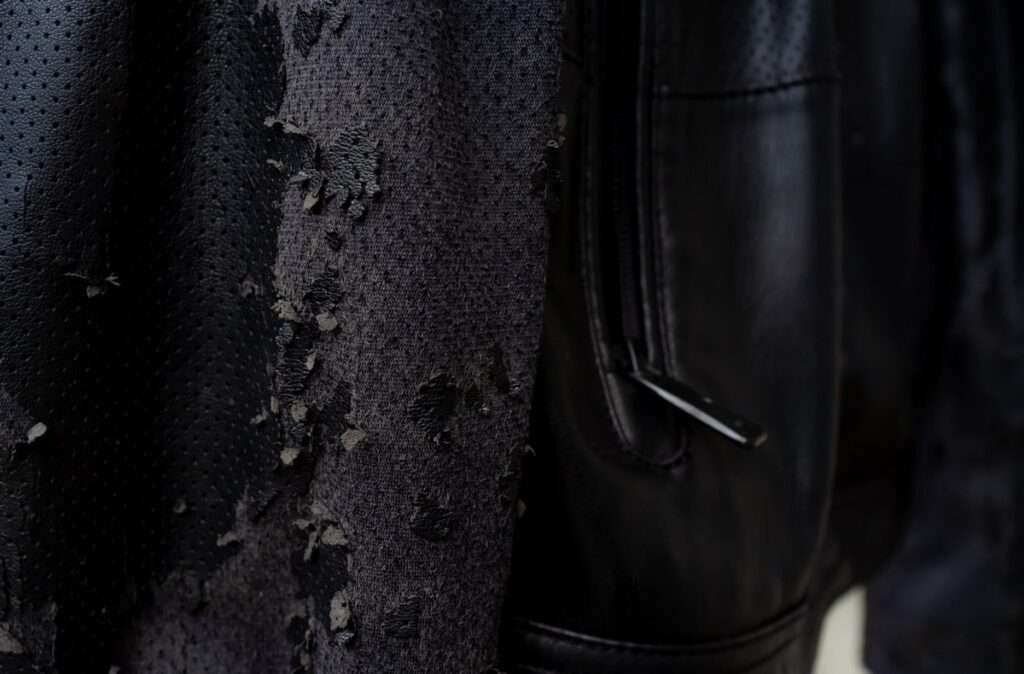
Faux leather, often marketed under names like “vegan leather” or “PU leather,” is a man-made fabric designed to mimic the appearance of real animal hide. Most faux leather is produced by bonding a plastic coating to a fabric backing.
There are two primary types of synthetic leather:
- Polyurethane (PU): This is the most common form of faux leather used in fashion. It is created by applying a liquid plastic polymer to a base fabric like polyester or cotton.
- Polyvinyl Chloride (PVC): This version is tougher and less breathable than PU. It was more common in the past but is now less popular for clothing because of its rigid texture and the environmental concerns surrounding its production.
While these materials look like leather at a distance, they lack the complex fiber structure of the real thing. They are essentially plastic sheets. For more technical details on polymer structures, the National Institute of Standards and Technology (NIST) provides extensive resources on how synthetic materials behave under stress.
Durability and Longevity: The 20-Year Rule
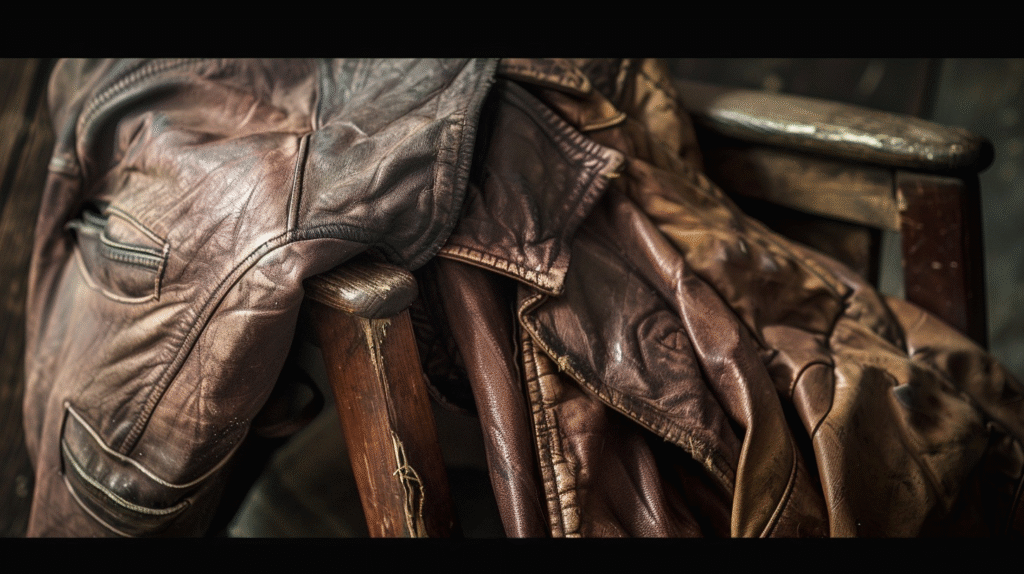
The most significant difference between the two materials is how long they last. A high-quality, genuine leather jacket from a craftsman like LVH Leather is not just a piece of clothing; it is a legacy item. If cared for properly, a real leather jacket can easily last 20 to 50 years.
Real leather is naturally resistant to tearing and puncturing because of its interconnected collagen fibers. Even if it gets a scratch, it often adds to the character of the jacket. On the contrary, faux leather is prone to a process called “peeling.” Because the plastic layer is only bonded to the surface of the fabric, it begins to crack and flake off after just two or three years of regular use. Once a faux leather jacket begins to peel, it cannot be repaired, and the garment usually ends up in a landfill.
The Patina Factor: Aging vs. Wearing Out
One of the most beautiful aspects of genuine leather is the development of a “patina.” As you wear a real leather jacket, it absorbs oils from your skin and reacts to the environment. Over time, the leather becomes softer and more supple and develops a unique sheen or color depth. This means that your jacket actually looks better five years after you bought it than it did on the day it arrived.
Faux leather does not age; it only wears out. Because it is a plastic-based product, it remains chemically static until it begins to degrade. It will never become softer or more comfortable with time. Instead, the synthetic fibers will stretch and eventually break, leading to a loss of shape and structural integrity.
Breathability and Comfort: The Science of Pores
Comfort is a primary concern for any outerwear. Genuine leather is a porous material, meaning it allows air and moisture vapor to pass through. This natural breathability helps regulate your body temperature. It keeps you warm in the winter but prevents you from overheating when the temperature rises slightly.
Faux leather is non-porous. Since it is essentially a layer of plastic, it traps heat and moisture against your skin. This often leads to a “sweaty” or clammy feeling, even in moderate weather. For those living in humid climates, the lack of breathability in synthetic leather can make a jacket almost unwearable for long periods.
Ethics and Sustainability: The Environmental Impact
In recent years, many brands have marketed faux leather as “vegan” to appeal to environmentally conscious consumers. However, the reality of sustainability is more complex. While faux leather does not use animal hides, its production relies heavily on the petroleum industry.
The manufacturing of PU and PVC involves hazardous chemicals that can be harmful to factory workers and the surrounding environment. Furthermore, faux leather is not biodegradable. When a synthetic jacket is discarded, it can take hundreds of years to break down, eventually turning into microplastics that pollute the ocean. Information from The Environmental Protection Agency (EPA) highlights the long-term impact of non-biodegradable plastics on global ecosystems.
Genuine leather, by contrast, is a byproduct of the meat and dairy industry. If the hides were not tanned into leather, they would be discarded as waste. Additionally, leather is a natural material that eventually biodegrades. When you consider that one real leather jacket can replace ten faux leather jackets over a lifetime, the carbon footprint of genuine leather is often much lower.
How to Identify Real Leather: The Five-Senses Test
If you are shopping and unsure about the quality of a jacket, use these methods to identify the material:
- The Scent Test: Real leather has a distinct, earthy, and rich smell. Faux leather smells like chemicals, plastic, or glue.
- The Texture Check: Look at the pores on the surface. In genuine leather, the pores are distributed somewhat inconsistently because they are natural. In faux leather, the pattern is usually perfectly repeated because it is stamped by a machine.
- The Water Test: Real leather is porous and will absorb a small drop of water after a few seconds. Water will usually bead up and roll off the surface of faux leather.
- The Edge Test: Check the seams. Real leather has rough, fibrous edges. Faux leather edges are usually smooth and clean, and look like they have been cut from a sheet of plastic.
- The Temperature Test: Genuine leather feels warm to the touch almost immediately. Faux leather feels cold and takes longer to adjust to your body heat.
Maintenance: Caring for Your Investment
To ensure your LVH Leather jacket lasts a lifetime, a small amount of maintenance is required. Real leather should be conditioned once or twice a year to keep the fibers hydrated. Use a high-quality leather balm or cream to prevent the hide from drying out.
Faux leather requires almost no maintenance, but that is because you cannot actually maintain it. No amount of conditioner can prevent quality from cracking once the chemical bonds begin to fail.
Cost Analysis: Price vs. Value
A genuine leather jacket is undeniably more expensive upfront. However, savvy shoppers look at the “cost per wear.”
- A $400 genuine leather jacket that lasts 20 years costs you $20 per year.
- A $80 faux leather jacket that lasts 2 years costs you $40 per year.
Over a decade, you will likely spend more money replacing cheap synthetic jackets than you would have spent on a single, high-quality piece of craftsmanship.
Frequently Asked Questions
Is “vegan leather” the same as faux leather?
Yes, in most cases, “vegan leather” is simply a marketing term for PU or PVC plastic. While there are emerging plant-based leathers made from cactus or pineapple, the vast majority of “vegan” jackets on the market are synthetic polymers.
Does real leather peel?
No, genuine leather does not peel. If you see a jacket “peeling” in thin layers, it is either faux leather or “bonded leather,” which is a mix of shredded leather scraps and plastic glue.
Can real leather be worn in the rain?
Yes, but you should take precautions. If your jacket gets wet, let it air dry naturally away from a heater. Once dry, apply a conditioner to restore the natural oils that the water might have washed away.
Conclusion: Why LVH Leather Stands for Quality
Choosing between real leather and faux leather depends on your values. If you are looking for a disposable fashion item for a single season, faux leather might suffice. However, if you value heritage, durability, and the unique character that only a natural material can provide, genuine leather is the only choice.
At LVH Leather, we believe in true craftsmanship. We prioritize the selection of premium hides that tell a story through their texture and longevity. A leather jacket is more than just a garment; it is a companion that grows with you, adapts to your body, and becomes a part of your personal history.
Invest in quality. Invest in a material that stands the test of time.