


A premium leather jacket is more than just a piece of clothing. It is a lifelong investment, a style statement, and a second skin that grows more character with every passing year. However, the most expensive leather jacket in the world will look mediocre if the fit is incorrect. For many enthusiasts, the challenge of online shopping is the uncertainty of sizing.
At LVH Leather, we believe that the journey to owning a masterpiece begins with the perfect measurement. This guide serves as a definitive resource to help you understand the nuances of leather jacket sizing, ensuring that your next purchase feels like it was custom-tailored specifically for your frame.
Why the Perfect Fit Matters in Leather

Unlike cotton hoodies or polyester windbreakers, leather does not drape in the same way. It is a natural, dense material that provides structure to your silhouette. If the jacket is too large, it appears bulky and loses its edge. If it is too small, it restricts movement and puts unnecessary stress on the seams.
The goal of a perfect fit is to find a balance between comfort and aesthetics. A well-fitted jacket should feel snug but not restrictive. It should accentuate your shoulders while tapering slightly toward the waist. Understanding this balance is the first step toward achieving the LVH Leather fit standard.
The Anatomy of a Perfectly Fitted Jacket
To master the art of sizing, you must first understand the four key areas where a leather jacket must fit correctly.
1. The Shoulders: The Anchor Point
The shoulders are the most critical part of the jacket. The seam where the sleeve meets the body should sit exactly on the edge of your shoulder bone. If the seam hangs down toward your upper arm, the jacket is too big. If it pulls toward your neck, the jacket is too small. Unlike the waist or sleeves, altering the shoulders of a leather jacket is extremely difficult and expensive. You should always prioritize the shoulder fit above all else.
2. The Chest and Torso
A leather jacket should hug your chest without feeling like a corset. When the jacket is fully zipped, you should be able to fit two fingers comfortably between your chest and the leather. This provides enough room for a light shirt or a thin sweater without creating unsightly bulges. For more information on the history and evolution of these garment standards, you can explore the history of the flight jacket, which set many of today’s sizing benchmarks.
3. Sleeve Length and Armholes
The sleeves should end right at the base of your thumb or at your wrist bone. This ensures that when you move your arms or drive, the sleeves do not slide too far up your forearm. Additionally, the armholes should be cut high enough to allow for a full range of motion. Low-cut armholes often cause the entire jacket to lift when you raise your arms, which is a sign of a poor fit.
4. The Overall Length
Traditionally, a leather jacket should hit right at your belt line. This cropped look is what gives the jacket its iconic “tough” silhouette. While modern fashion occasionally explores longer cuts, a classic biker or racer jacket should never cover your entire seat.
How to Measure Yourself Like a Professional
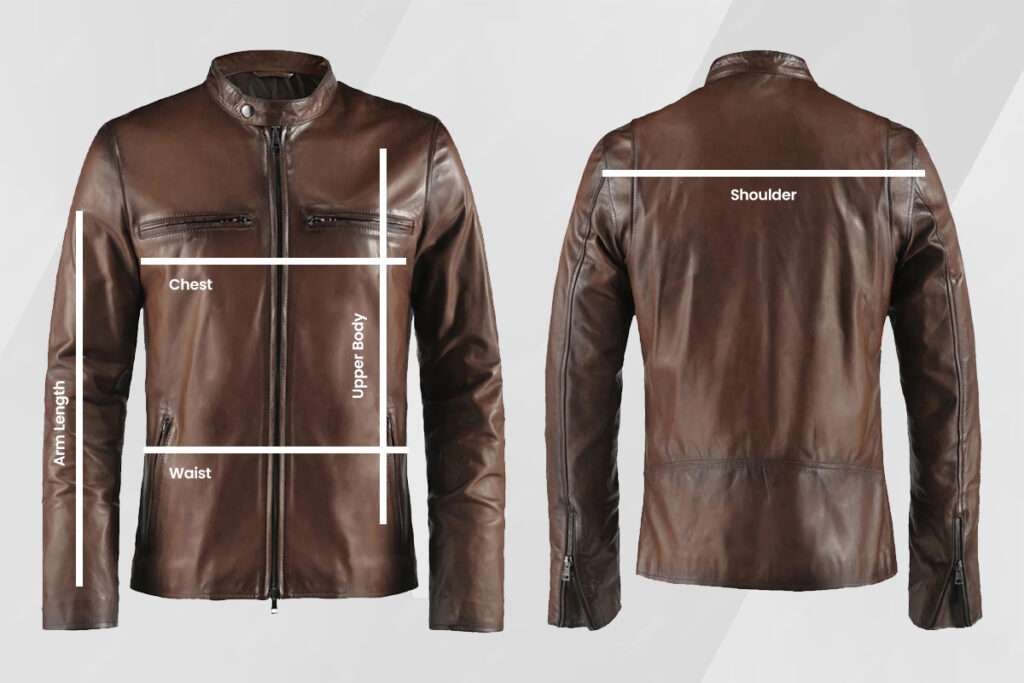
To get an accurate measurement, it is best to use a flexible cloth measuring tape. Do not use a metal construction tape because it will not follow the contours of your body. For the most accurate results, ask a friend to help you or stand in front of a full-length mirror.
Step 1: Chest Measurement
Wrap the tape measure around the widest part of your chest, keeping it level under your armpits and across your shoulder blades. Breathe normally and do not puff out your chest. This measurement is the primary indicator of your jacket size in most US and UK sizing charts.
Step 2: Shoulder Width
Measure from the tip of one shoulder bone, across the top of your back, to the tip of the other shoulder bone. This measurement ensures the “anchor point” of your jacket sits perfectly.
Step 3: Sleeve Length
Place one end of the tape at the edge of your shoulder bone and extend it down to your wrist. Keep your arm slightly bent to account for the natural movement of the leather.
Step 4: Waist and Hips
Measure around your natural waistline, which is usually right above the belly button. Leather jackets are often tapered, so if you have a larger midsection, this measurement is crucial to ensure the jacket can be zipped comfortably. According to style guides from GQ Magazine, the taper of a jacket is what creates the desirable V-shaped masculine silhouette.
Understanding Fit Styles: Biker vs. Bomber vs. Racer
Not every leather jacket is designed to fit the same way. The style of the jacket dictates how it should sit on your body.
The Biker (Double Rider)
Biker jackets are designed for functionality and protection. They are typically cropped at the waist and fit very snugly to prevent wind from entering while riding. The asymmetric zipper and lapels add bulk, so a slim fit is essential to keep the look balanced.
The Cafe Racer
The cafe racer is the most minimalist style. It features a small snap collar and a straight zipper. This jacket is meant to be worn like a second skin. It is the most “tailored” of all leather styles and looks best when it follows the natural lines of the body closely.
The Bomber Jacket
Bomber jackets were originally designed for pilots who needed warmth in cold cockpits. These jackets have a more relaxed fit through the chest and arms. They often feature ribbed cuffs and waistbands that “cinch” the leather, creating a slightly puffed-out look. If you prefer a more comfortable, layered look, the bomber is the ideal choice.
The Science of Leather: Stretching and the Break-in Period
One of the most unique aspects of leather is that it is a dynamic material. Unlike synthetic fabrics, leather has a “memory.” When you first put on a high-quality leather jacket, it might feel a bit stiff or slightly too tight. This is normal.
Over the first few weeks of wear, the heat from your body will soften the hides. The leather will stretch in areas of tension, such as the elbows and shoulders, and mold to your specific shape. This is known as the “break-in period.”
It is important to note that different types of leather stretch differently. Lambskin is soft and thin, meaning it will stretch and conform to your body very quickly. Cowhide and horsehide are much thicker and more rigid. These materials require more time to break in but offer superior durability. For a deeper look at the different grades of leather and their properties, you can refer to vogue’s fashion encyclopedia for material insights.
International Sizing: US vs. European Standards
When shopping at LVH Leather, you may notice different sizing conventions.
- US Sizing: Usually labeled in inches (e.g., Size 40, 42) or letter sizes (S, M, L). US sizes tend to be more generous in the torso and shoulders.
- European Sizing: Labeled in numbers like 48, 50, or 52. European cuts are generally much slimmer and have higher armholes.
Always refer to the specific size chart provided on our product pages. A “medium” in a slim-fit racer jacket may fit differently from a “medium” in a classic bomber jacket.
Common Mistakes to Avoid
Most returns in the leather industry happen because of a few common errors.
1. Using T-Shirt Size as a Guide
This is the most frequent mistake customers make. T-shirts are made of stretchy knit fabrics, whereas leather is a fixed-grain material. Your T-shirt size is rarely your jacket size. Always rely on actual inch measurements rather than letter sizes.
2. Ignoring the Layering Factor
If you live in a cold climate and plan to wear thick hoodies or heavy knitwear under your jacket, you may need to size up. However, if you primarily wear your jacket over a T-shirt or a dress shirt, stick to your measured size for that sleek, modern look.
3. Forgetting the “Zip-Up” Test
Some people only intend to wear their leather jackets open. While this is a valid style choice, you should still ensure the jacket can zip up. If a jacket cannot be zipped, it means the shoulders and armholes are likely too small, which will cause discomfort even when worn open.
Expert Tips for Different Body Types
- Athletic Build: Look for jackets with “bi-swing” backs. These feature extra pleats near the shoulders that allow for more movement if you have broad shoulders and a narrow waist.
- Taller Individuals: Focus on the sleeve length and total body length. Many brands offer “Tall” versions of their jackets to ensure the hem does not sit too high.
- Shorter Individuals: Avoid jackets that are too long in the torso, as they will make your legs look shorter. A cropped biker jacket is often the most flattering choice.
Conclusion: The LVH Leather Quality Standard
Finding the right fit is the final step in your journey toward owning an iconic piece of outerwear. At LVH Leather, we take pride in our craftsmanship and the precision of our sizing. By taking the time to measure your chest, shoulders, and sleeves accurately, you ensure that your jacket will not only look incredible but will also feel like a part of you.
Remember that leather is a legacy material. A jacket that fits perfectly today will become a cherished part of your wardrobe for decades to come. Use the tools and tips in this guide to make an informed decision and step out in confidence with the perfect fit.
Frequently Asked Questions
Should a leather jacket be tight when I first buy it?
Yes, it should be comfortably snug. You should be able to move your arms, but the leather should feel close to your body. It will relax and stretch slightly as you wear it.
Can a leather jacket be tailored?
Yes, but it is a specialized process. A regular tailor may not have the heavy-duty sewing machines required for leather. It is always better to buy the correct size initially than to try to alter it later.
How do I know if the sleeves are too long?
If the leather starts to bunch up significantly at the wrist or if you cannot see your hands, the sleeves are too long. Leather sleeves will develop “creases” at the elbow over time, which will naturally shorten the sleeve length by about half an inch.